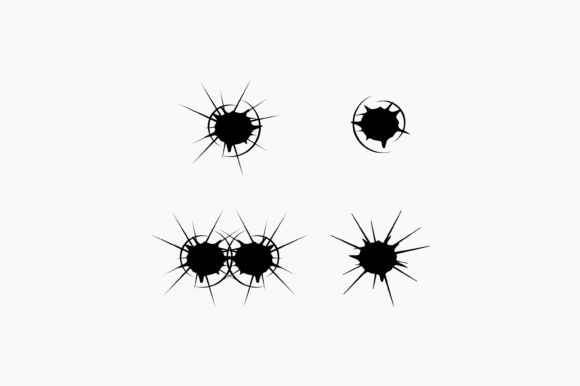
Bullet Hole
First Impressions: A Design with Edge and Purpose
The moment I first saw Bullet Hole, I was struck by its raw, unapologetic aesthetic. It’s not a design that tries to be everything—it’s focused, direct, and carries a mood of strength and resilience. The image is clean, with sharp lines and minimal detail, which makes it immediately recognizable. It feels like something you’d find on a military patch or a rugged outdoor gear item. But beyond the theme, what really stands out is how well it translates into embroidery.
Visual Personality and Use Case
Bullet Hole is a design that speaks to simplicity and impact. It’s perfect for projects where the message needs to be clear without distraction. Think about a custom embroidered tote bag for a survivalist-themed boutique, or a personalized gift for someone who appreciates bold, meaningful symbols. Its shape is geometric and straightforward, which means it doesn’t require much adjustment when resizing—something that’s a huge plus for designers working across multiple product formats.
As an embroidery designer, I often look for designs that can adapt to different applications. Bullet Hole fits this bill well. Whether it’s used as a machine embroidery design on a sweatshirt, an applique design on a cap, or a digital embroidery file for a printable mockup, it holds up. Its lack of intricate details means it’s less likely to suffer from stitch distortion or poor resolution, making it ideal for both personal and commercial use.
Real-World Testing: How Bullet Hole Performs in Practice
To get a better sense of Bullet Hole’s performance, I tested it on a few different fabric types and hoop sizes. The results were consistent and promising. On a cotton canvas, the design held up well, with clear outlines and even stitch density. When I resized it to fit a smaller hoop, it still maintained its integrity, which is a big plus for those working with limited space.
I also tried using it on a stretchy fabric, like a knit t-shirt. While it did slightly distort, the overall shape remained intact, and the edges didn’t fray. This suggests that Bullet Hole is versatile enough to work on a range of materials, though I would recommend using a proper stabilizer to maintain its form.
Design Considerations for Specific Projects
If you’re planning to use Bullet Hole on a baby item, such as a onesie or a blanket, you’ll want to ensure that the design is scaled appropriately. Small details can sometimes get lost on delicate fabrics, so testing on scrap material before committing to a finished product is always a good idea.
For holiday or wedding gifts, Bullet Hole could add a unique twist to a custom embroidered patch or a tote bag design. It has a strong visual presence that can make a statement without being overwhelming. However, if you’re targeting a more whimsical or playful audience, you might want to pair it with other elements to balance the tone.
Where to Be Cautious
While Bullet Hole is a solid choice for many applications, there are a few scenarios where it might not perform as well. For instance, on dark fabrics, the contrast between the design and the background can be less pronounced. This means you’ll need to choose thread colors carefully to ensure visibility. Testing the design in black and white mockups can help identify any potential issues early on.
Similarly, on textured or layered garments, the design may not sit as flat as expected. This is especially true for items like aprons or kitchen towels, where fabric thickness can affect the final appearance. In these cases, using a high-quality stabilizer is essential to keep the design crisp and professional.
Impact on Product Value and Customer Trust
When designing for a craft business or Etsy shop, the quality of your embroidery file plays a crucial role in customer trust. Bullet Hole offers a clean, modern look that aligns well with current trends in handmade products and personalized gifts. Its simplicity makes it easy to incorporate into a variety of projects, which can help expand your product line without sacrificing consistency.
From a brand perspective, Bullet Hole can serve as a signature element that helps differentiate your offerings. Whether it’s used as a commercial embroidery project for a boutique or as a design asset for digital previews, it adds a layer of professionalism that customers will appreciate.
Practical Design Notes for Embroidery Professionals
Before using Bullet Hole in a real project, I recommend a few key steps. First, test the design on scrap fabric to see how it looks in practice. Next, check the stitch density and ensure that the design isn’t too dense for the fabric you’re using. Also, confirm the hoop size to avoid stretching or distortion.
Thread color selection is another important factor. Since Bullet Hole is a single-element design, choosing the right thread can make all the difference in how it appears on the final product. Don’t forget to review the thread colors and consider how they’ll look against different fabric backgrounds, especially when creating printable mockups.
Finally, always verify the licensing terms before selling finished items or digital products. As a craft business owner or Etsy seller, ensuring that you have the proper rights to use the design is essential for long-term success.
Final Thoughts: A Reliable Choice for Real Projects
Bullet Hole is a design that delivers on its promise. It’s simple, effective, and adaptable—perfect for a wide range of embroidery projects. Whether you’re looking to create a custom apparel piece, a personalized gift, or a small shop product, it has the versatility and clarity to meet your needs.
With a little care and attention to detail, Bullet Hole can become a valuable asset in your design toolkit. It’s a great example of how a seemingly simple design can have a big impact when executed thoughtfully.